Topic: Media
Nokia Research teams up with Sesame Street to improve communications for dispersed families. "Would you like to be able to read Sesame Street books with your child when you are far away from home? Or have your child's grandparents or other loved ones read with your child from afar? The furry friends from Sesame Street have teamed up with Nokia Research Center to help children connect with their long distance loved ones." Jofish Kaye from Nokia describes the development and value of this project.
Mike McCue, a serial web entrepreneur, compares his latest venture, Flipboard, to the 1957 Jaguar XKSS. Flipboard, a "social magazine" for the tablet, brings the best of print production values and sprinkles in social aspects in a web interface that is out to make a new premium web category. Mike describes his perspective, with online examples, of how art fits into his business model.
Have writers been 'disintermediated,' like other 'middlemen,' from the relationship between their content and readers? Joanne Bradford, the CMO and Chief Revenue Officer of Demand Media, one of the largest content vendors on the web, talks to this point. Demand Media provides service articles and videos, the most popular being eHow.com. Bradford gives advice to writers on how to win the content game: Know what you're good at, build your fan base, learn the technology, and be prolific.
Once Andrew Savikas took over as CEO of Safari Books, he realized a few things about the online subscription model. First, he realized Safari Books has had a 100% growth each year for the last ten (10) years. Second, he witnessed the number of tablets double over Christmas 2011. This meant that customers were becoming accustomed to reading online and using online subscription services. In this keynote, Andrew suggests that subscription models offer a bona-fide business model for publishers of many genres of books.
Twentieth century advertising is caricatured as hucksters selling the 30-second TV commercial as a panacea for market obscurity. These days, advertising, experiential marketing, and public relations have taken off in the digital space. Michael Roth, head of Interpublic, says they have done some good business investing in digital and social media, besides their early investment in Facebook, and are set to offer the most responsive transmedia campaigns to their clients' needs.
Do not let what you see in the front window at eBay distract you - it is the backroom of the shop that is really interesting. eBay announced X.Commerce, its shopping and payments platform services in late 2011. On top of its acquisition of PayPal, eBay is bulking up into an online payments powerhouse! John Donahoe, president and CEO if eBay, talks with John Battelle about retail and the trends for online purchasing and payment.
Can you imagine the U.N. running the internet? The internet has been a Wild West of innovation, fortune-changing, and, yes, job growth, but now regulation steps in, says Daniel Weitzner, Deputy Chief Technology Officer for Internet Policy in the White House. Here, he discusses the global open internet and its relation to governments and public perception. He emphasizes the importance of open access to information on the internet for innovation and job growth, yet this is offset by growing trust issues.
Through the extended metaphor of the current 'Slow Food' movement, Stefan Agamanolis presents Distance Lab's ideas for the future of telecommunications. He discusses future and more personalized methods of communication, including immersion tank 'isophones,' platforms to simultaneously watch movies and interact with the audience, and music players that allow listeners to broadcast, share, and interact, just to name a few.
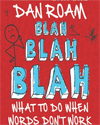
Dr. Moira Gunn catches up with author Dan Roam who gives her a lesson in what to do when even the right words don't work, from his new book, Blah, Blah, Blah: What to do when words don?t work.
If Facebook were a nation, it would be the second-largest in the world. A billion images are uploaded there every four days. If Facebook were a president, it would be FACEbraham Lincoln! Michael Lazerow of Buddy Media scales Facebook and presents brand marketing schemes that have worked on the social network. Lazerow says the best campaigns are fairly straightforward. Given the immense popularity of Facebook as media, brands would be crazy not to try to connect with constituents there.